LITERACY lOGIC from the HEART
1. All students can be successful.
2. The more literate a student is, the more successful the student will be.
3. Our greatest impact in our students lives can be measured by the relationships we build with students and how successful they remember feeling in our classrooms.
4. Therefore, building literacy that builds success should be our primary concern.
My job, as I see it at the alternative school is to be "irrationally crazy" about my students. (Uriel Von Effenbrenner) and help them along their path by providing a literacy rich experience.
READING THE WORLD
Interpreting the world, understanding intentions, negotiating the complexities of the demands of the 21st century learner is my passion. I build courses with those literacies in mind. Last year we had a CTS boot camp at the beginning of the year. We did CTS courses such as Workplace Practises and Safety, Maturity and Development, Digital Citizenship, Financial Management, first Aid, Safety and Sanitation in the Kitchen and Personal Training and Development. All of these courses build literacy. The handout we received yesterday allowed me to categorize the literacy strands more cohesively.
Many of our students are ESL and reluctant readers. They score more than 3 grade levels below expectations. We have to imbed "learning how to read" in courses. I have always considered this my weakness as a teacher. I was a voracious reader and never had any difficulties with reading or negotiating literacy. I have learned by reflecting and taking this course that reading has to be practised. Whatever strategies we can imbed in our lessons will build literacy skills in our students. Practices such as think-pair-share, graphic organizers, assist ice technology, literacy rich environments, students' interests, guiding questions, choice in reading, modelling reading and discussions and activities that promote reading comprehension. I can enrich my school's environment by sharing my love and passion for reading more overtly. Literacy needs to act like a contagious virus that I intentionally spread.
Writing can be a daunting task for students who have been raised with screens. The students in my school, at-risk are far more used to being passive watchers than active participants. Writing is intimidating and exposes vulnerabilities. I give recipes for writing which are a step-by-step approach. T-3, SEXEXS in every paragraph, conclusion. (Thesis with 3 arguments, statement from thesis, explain, example and sum up in every paragraph, conclusion). This year, I want to create a student driven writing community and self-publish their work. I believe this will build success. I have done Napi Legend art projects that students researched Napi stories, wrote them, portrayed them on murals and presented them (they are on display at the Head Smashed-In Buffalo Jump). Cross-curricular, success building projects such as these build writing competencies and literacy. I will plan one of these this year as well, depending on student interest and needs. Writing literacy is intentional and success-building!
I have been working in the curriculum for quite awhile, however, I am excited about the treasures I have been directed to find on the Alberta Education web site. The implementation guide is a treasure trove of activities and ideas. I have also added to my toolkit a plethora of activities. The performance poet, Shane koyzcam is a new favorite. The Canadian Literarure presented and displayed added to my resource base! I am going to create a dross curricular unit of study for social studies and English that is literature based. History is a masterful teacher of curriculum.
The "take away" I have from this course is the one page guide! I will share this with my staff. The 1/3personal, 1/3 others/ 1/3 world is a great way to divide planning! The intentional literacy skills are going to be a focus for my teaching and assessing. Being a great citizen, GLO 5,has not been intentional as it is difficult in module, individualized learning. Now, I have skills to make this more evident. Being literate for my students is actually the goal of the school "get 'er done and graduate". We help them get 'er done. I have always wanted to become "that" teacher that is counted as one of the helpful ones, not the ones that horror stories are passed from generation to generation! But hey, that's literacy too! The oral tradition lives!
Literacy is a language that we can all learn and teach! I speak French and I love second languages. I believe using literacy language and vocabulary in our daily practice will make literacy an imbedded practice that enriches our school community.
Tuesday, 28 July 2015

Monday, 27 July 2015
Best literacy strategies July 27
Resources to build literacy: novels, photos, letters, video lip
Evaluation or assessment : photo essay, research, paragraph, reading test
RAFT: use a compelling format-texting, soundtrack, tour brochures, claymation, author interview, advertising, write a play
English student learning assessment: literacy awareness and literacy knowledge and understanding
Learner awareness and task awareness
Rules of learners, information, construct meaning and communicate meaning
Different types of learners, different types of literacies!
Kindness and fairness
Make a difference by putting students first!
Read with to about from students....
Help students become great people 😇
Evaluation or assessment : photo essay, research, paragraph, reading test
RAFT: use a compelling format-texting, soundtrack, tour brochures, claymation, author interview, advertising, write a play
English student learning assessment: literacy awareness and literacy knowledge and understanding
Learner awareness and task awareness
Rules of learners, information, construct meaning and communicate meaning
Different types of learners, different types of literacies!
Kindness and fairness
Make a difference by putting students first!
Read with to about from students....
Help students become great people 😇
Thursday, 23 July 2015
Teaching literacy in content areas July 23
Social studies: guest speakers, novel, poetry, kwl, 6 strands basis critical thing using performance tasks
Math and science: charts, maps, numerical literacy, guest speaker, field trips, word wall, vocabulary, proof and justify, games and activities, fish bowl discussion, debate
Drama and fine arts: using your voice as an instrument, using images and color, describing tableaux, creating a play and a voice, acting and representing, readers theatre, art history, aesthetic expression
PE: goal setting using books and films. Rules of games, health has 6 strands and can include literacy and guest speakers. Pattern of movement, and alphabet
Math and science: charts, maps, numerical literacy, guest speaker, field trips, word wall, vocabulary, proof and justify, games and activities, fish bowl discussion, debate
Drama and fine arts: using your voice as an instrument, using images and color, describing tableaux, creating a play and a voice, acting and representing, readers theatre, art history, aesthetic expression
PE: goal setting using books and films. Rules of games, health has 6 strands and can include literacy and guest speakers. Pattern of movement, and alphabet
3Texts to Save the World rubric
Researched pertinent information
Why this book-intro rationale and overview
Worthwhile activities-outcomes and student engagement
Assessment-formative and summative
Evidence of teacher thinking: 6 strands,glo and unit outcomes with cross curricular
Why this book-intro rationale and overview
Worthwhile activities-outcomes and student engagement
Assessment-formative and summative
Evidence of teacher thinking: 6 strands,glo and unit outcomes with cross curricular
Meaningful texts Andrea: The Heart in the Bottle
A children's book about a girl's curiosity and pushing her emotions aside! A very complicated theme presented in a very innocent way. Metaphors enrich and deepened the meaning. A book about loss and grief.
Wednesday, 22 July 2015
Planning for units July 22
July 22
Unit Design
Organization
User friendly
Overview page
Cross curricular
Formative and summative tasks
Differentiated instruction
Designed for teachers but aimed at kids
Calendar of activities
Flow of synchronous activities
And asynchronous
Table of contents
For/as/of
Parent letter: what and why
Big picture and specifics
Extension and enrichment for differentiation
Glo and strands
Unit Design
Organization
User friendly
Overview page
Cross curricular
Formative and summative tasks
Differentiated instruction
Designed for teachers but aimed at kids
Calendar of activities
Flow of synchronous activities
And asynchronous
Table of contents
For/as/of
Parent letter: what and why
Big picture and specifics
Extension and enrichment for differentiation
Glo and strands
Tuesday, 21 July 2015
Real writing: July 21
Format:
Audience:
Message:
All wrapped up in a context
Developing the self
Esthetic writing
Informational writing
Forms of writing
Expressive for the self
Transactional to exchange
Persuasive
Narrative to tell a story
Skills
Handwriting
Punctuation
Capitalization
Spelling and grammar
Pre writing---writing---respond-- revising---editing---publishing: teach it
Curriculum of writing: intentions ---display-- activities-- evaluation : IDEA
1/3 personal
1/3 literary
1/3 expository -informational
Read your work out loud...you can hear the errors
Teach personal writing to teach knowledge of the self: topical and real-- reflections
Teach literary writing: poetry biography narrative drama --educate and build imagination
Teach expository writing: description reports explanation persuasion argument process and procedure
Teachers role
Motivation
Discipline
Deadlines
Build community
Context
Energy
Relationship with students
Attitude toward writing
How do you enable them? Collaborate journalism literary to learn contextualized grammar sentence
Am I reading? Am I editing? Ask students which role they want you to be!
4 needs: good substance in context, skills, structure, style
Evaluating student writing: self, peer, rubrics, portfolios, class anthology, contests, class literature, exam writing diploma
INVOLVE your STUDENTS
Writing assessments in 6 lessons
Multiple performances:write write write
There is no proxy! Be a writer yourself!
Construct being measured is clearly defined! What are you looking for?
Consistency through dialogue
Real audiences matter
Attend to consequences: what do you want from this writing
What do you need to know to complete the task
Skills that are necessary
Audience
*********************************
Know something
How language works
Format and audience
Meta cognition
How does this process meet the curriculum outcomes
********************************************
Guide to implementation
Appendix a templates
Appendix b; assessment! cHECK THIS OUT!
Audience:
Message:
All wrapped up in a context
Developing the self
Esthetic writing
Informational writing
Forms of writing
Expressive for the self
Transactional to exchange
Persuasive
Narrative to tell a story
Skills
Handwriting
Punctuation
Capitalization
Spelling and grammar
Pre writing---writing---respond-- revising---editing---publishing: teach it
Curriculum of writing: intentions ---display-- activities-- evaluation : IDEA
1/3 personal
1/3 literary
1/3 expository -informational
Read your work out loud...you can hear the errors
Teach personal writing to teach knowledge of the self: topical and real-- reflections
Teach literary writing: poetry biography narrative drama --educate and build imagination
Teach expository writing: description reports explanation persuasion argument process and procedure
Teachers role
Motivation
Discipline
Deadlines
Build community
Context
Energy
Relationship with students
Attitude toward writing
How do you enable them? Collaborate journalism literary to learn contextualized grammar sentence
Am I reading? Am I editing? Ask students which role they want you to be!
4 needs: good substance in context, skills, structure, style
Evaluating student writing: self, peer, rubrics, portfolios, class anthology, contests, class literature, exam writing diploma
INVOLVE your STUDENTS
Writing assessments in 6 lessons
Multiple performances:write write write
There is no proxy! Be a writer yourself!
Construct being measured is clearly defined! What are you looking for?
Consistency through dialogue
Real audiences matter
Attend to consequences: what do you want from this writing
What do you need to know to complete the task
Skills that are necessary
Audience
*********************************
Know something
How language works
Format and audience
Meta cognition
How does this process meet the curriculum outcomes
********************************************
Guide to implementation
Appendix a templates
Appendix b; assessment! cHECK THIS OUT!
Monday, 20 July 2015
My 3 texts that will save the world! Link
One of my goals for the course was to start an English 30-2 online learning management system with weebly.com.
I have the lessons located under the "My Identity" tab. There will be 7 lessons for this assignment but the overview page for the unit has enough texts to create 12 lessons.
english30-2.weebly.com
I have the lessons located under the "My Identity" tab. There will be 7 lessons for this assignment but the overview page for the unit has enough texts to create 12 lessons.
english30-2.weebly.com
Friday, 17 July 2015
Leah's Meaningful Texts: RESPONSES TO PRESENTATIONS IN CLASS AND ONLINE
Poetry by Shane Koyczan: Shoulders on you tube
* narrative poetry
* Collective consciousness
* sky and earth are one
* I to We movement
* activism
* cross curricular themes
* "be the change you want to see" Ghandi
Process: enter..extend..explore
************************************
Professional Applications
*validate each student's ideas
*FNMI Elders
*the world is a village
*grade 10 Social Studies globalization
* précis
*literary devices
*protest poetry
* music choices
*mediate
************************n************
July 13
Connect to the 8 parts of speech
Literature review... Dreaming an Indian
Visual novels; Shaun Tan
************************************
The most common reason kids don't graduate is due to literacy issues! I totally believe this. In the work I am doing at the alternative school, students struggle with language but more so math. I have a large percentage of First Nation learners. The legacy of the residential schools on the first nation people has been immeasurable! It is our responsibility to undo the damage done by being better at what we do. We have a motto at our school, "get her done and graduate". We do teaching that focuses on the individual students. Every teacher is a literacy teacher.
That is the second point made by the "Literacy First" document. Gone are the days when you can say I am a science teacher.. All teachers are literacy teachers, with the changing landscape of Alberta's population, language learners, immigrants, and first Nations people, we have a job to do!
********************************************************************************
What an amazing resource! Considering that we, as English Language Arts teachers are supposed to be using Canadian Literature/Texts and 1/3 of our study, this site is a goldmine of resources. I bookmarked this page and have returned to it several times to find resources for the English 30-2 site I am creating on weebly.com.
Margaret Atwood's poem "Death of a Young Son By Drowning" speaks to expectations, identity and sorrow. I will use this poem.
Douglas LePan "A Country Without Mythology" is an amazing visual romp through the themes of identity and nationalism. This will definitely add richness to the "My Identity" thematic unit;
The "Photograph of Me" by Margaret Atwood would be an appropriate poem for students to use as a creation point for a poem that describes a photograph that they have. I also checked out Leonard Cohen's website for songs and poems. "Anthem" would be a great starting point for creating their own anthem.
1. Contemporary Fiction acts as a mirror: what we are experiencing now
2. Historical Fiction acts as a window into what was "now" "then" and parallels to now.
3. Speculative Fiction acts as a magnifying glass to what is now
4. Graphic Novels and Picture books tell a story without a written narrative
5. Problem Novel: mirrors young people in contemporary society (problems: gender, family, multicultural,violence, injustice, illness, technology, social media etc.
*******************************************************************************
promotes readers' intellectual and imaginative growth
"nailing jelly to a wall: (Atwood 2004)
TEsseracts Fifteen: A case of Quite Curious Tales (futuristic]
Myth Magic and transcendent Imagination
fear of extinction, ritual, extremity of life and kingdom adn storytelling along another plan of existance
high fantasy in norse myths (The Feathered Cloak)
giants, kings, dragons, princes (Dragonmaster, Dragonseer)
fantasy adolescents between worlds, shape shifting, archetypal of childhood to adulthood
Hybrid Heroes
* narrative poetry
* Collective consciousness
* sky and earth are one
* I to We movement
* activism
* cross curricular themes
* "be the change you want to see" Ghandi
Process: enter..extend..explore
************************************
Professional Applications
*validate each student's ideas
*FNMI Elders
*the world is a village
*grade 10 Social Studies globalization
* précis
*literary devices
*protest poetry
* music choices
*mediate
************************n************
July 13
Connect to the 8 parts of speech
Literature review... Dreaming an Indian
Visual novels; Shaun Tan
************************************
Literacy First document: July 15
In reading this document I was struck by two ideas presented:The most common reason kids don't graduate is due to literacy issues! I totally believe this. In the work I am doing at the alternative school, students struggle with language but more so math. I have a large percentage of First Nation learners. The legacy of the residential schools on the first nation people has been immeasurable! It is our responsibility to undo the damage done by being better at what we do. We have a motto at our school, "get her done and graduate". We do teaching that focuses on the individual students. Every teacher is a literacy teacher.
That is the second point made by the "Literacy First" document. Gone are the days when you can say I am a science teacher.. All teachers are literacy teachers, with the changing landscape of Alberta's population, language learners, immigrants, and first Nations people, we have a job to do!
********************************************************************************
Contemporary Realism: July 16
Teaching Canadian Literature in Secondary Schools: WebsiteWhat an amazing resource! Considering that we, as English Language Arts teachers are supposed to be using Canadian Literature/Texts and 1/3 of our study, this site is a goldmine of resources. I bookmarked this page and have returned to it several times to find resources for the English 30-2 site I am creating on weebly.com.
Margaret Atwood's poem "Death of a Young Son By Drowning" speaks to expectations, identity and sorrow. I will use this poem.
Douglas LePan "A Country Without Mythology" is an amazing visual romp through the themes of identity and nationalism. This will definitely add richness to the "My Identity" thematic unit;
The "Photograph of Me" by Margaret Atwood would be an appropriate poem for students to use as a creation point for a poem that describes a photograph that they have. I also checked out Leonard Cohen's website for songs and poems. "Anthem" would be a great starting point for creating their own anthem.
CONTEMPORARY REALISM:
Social Justice: it educates and re-educates and challenges our assumptions1. Contemporary Fiction acts as a mirror: what we are experiencing now
2. Historical Fiction acts as a window into what was "now" "then" and parallels to now.
3. Speculative Fiction acts as a magnifying glass to what is now
4. Graphic Novels and Picture books tell a story without a written narrative
5. Problem Novel: mirrors young people in contemporary society (problems: gender, family, multicultural,violence, injustice, illness, technology, social media etc.
Why Teach Canadian Social Justice Literature:
- outcomes
- relevant
- innovative
- critical/personal response
- make writing cool
- build community
Authors: Deborah Ellis
Glen Huser: Stitiches
Dede Cran: Poster Boy
Susan Juby: Another Kind of Cowboy
CArrie Mac" the beckoners
Jamie Bastedo: On Thin Ice
Wendy Phillips: Fishtailing
Robert Sawyer: WAke WAtch Wonder
HOW TO CHOOSE THE TEXT
keep your students in mind
will they connect
are the themes relevent
characters engaging
language expressive
narrative compelling
CHOOSE THE AUTHOR
CHOOSE BY THEME;QUESTION
*********************************************************************************
July 17
Being a Social Studies and English teacher, I would love to teach a Humanities course that covers all the curriculum objectives by using historical literature!
My favorite quote from the chapter "Teaching historical fiction involves loss of innocence around what people are lik and w hat they do."CHAPTER 2 "READING CANADA"
- a recognizable vision of the human condition: "Looking for x"
- "Stitches" trailer trash
- "maestro" family dysfunction
- "Confessions of a Heartless Girl" teenage angst and drama
- gives a platform for discussion of "real issues and problems teens face"
- bullying
- poverty
- identity
- racism
- friendship
- multi culturalism (mennonites to aboriginals to immigrants to African-Canadian. Asian, gender) ALL CANADIAN!
- (Thomas King, Richtler, Culloten/ Drew Hayden Taylor) (Froggo,Nourbese-Phillip)
- HOW: scaffolding self-others-text-context, decode the narrative,
- STRATEGIES FOR INSTRUCTION: free writing, research about authors, thematic discussions, participatory drama vignettes, thematic web page searches, become a children's author, debate, class anthology
*********************************************************************************
July 17
Being a Social Studies and English teacher, I would love to teach a Humanities course that covers all the curriculum objectives by using historical literature!
PHASES OF TEACHING LITERATURE
- enter" diagrams/think pair share/ interview/internet
- explore:reader response / interpretive community/ formal analysis/ critical synthesis
- extend: creative projects/ real world research/real world community issues
Chapter 3 "READING CANADA"
- discussion of "What is the Truth"
- primary source evidence; whose truth?
- post colonial narratives: superiority vs inferiority\
- feminist narratives: voice and perspective and era of feminism
- the past is a foreign country and we are visitors
- knowledge of history: pre-contact/exploration/settlement/ creation of Canada: where does the text fit in? (Ann and Seamus, The GRavesavers)
- United Empire Loyalists/Rebels/Africans/Metis/Asians (Meyers Creek, Underground to Canada, I've got a Home in Glory Land, The Book of Negroes, Louis Riel, A Comicstrip Biograhy, Tales from Gold Mountain
- Eastern European (Mennonite) Russian, (Your Mouth is Lovely)
- Home Children (orphans prior to and up to the Great Depression) (Orphan at My Door)
- Internal Migration: Boomtowns and Cities (Frank Slide) (The Girl From Turtle Mountain)
- World War 1 narratives, diaries, poets (The WARS)
- Between the Wars: social and political realities: Postwar Immigration, the Great Depression (Concubines's Children, The Landing, Our Canadian Girl)
- Residential School (As Long AS Rivers Flow)
- World War 2, conflicts, evacuees children and communities (Looking at the Moon)
- Japanese Canadian Interment (Obasan)
- Public Health, Tuberculosis and Sanitoria (Queen of Hearts, The Crazy Man)
- Jewish Canadian Holocaust (Children of Fire, Margit, Book 1 Home Free, Turned Away, I was the Child of Holocaust Survivors)
- Postwar: Ideological struggles: Korea, Vietnam, Coldwar, (Pure Springs, The Way the Crow Flies, Gemini Summer)
- Mid Century Human Rights Pendulum (the right to vote, immigration, youth rights (Tin Angel)
- Aboriginal Voices (Kiss of the Fur Queen, Green Grass Running Water)
Goals of teaching historical fiction
- historical thinking
- literary insight
How?
close reading strategies
(build analytical historical and critical thinking skills)
1. read observantly through the passage, annotating and highlighting as you go-comment in the margins. look for details, rhetorical devices, hisoricical or cultural references.
2. Look for patterns that emerge, imagery, repetition, contradictions,similarities, underlying connections philosophically, geographically, metaphorically, relationally?
3. Meta-cognition: So what? Ask questions about the patterns and information/interpretations and responses
*******************************************************************************
Chapter 4 "Reading Canada"
Speculative Fictionpromotes readers' intellectual and imaginative growth
"nailing jelly to a wall: (Atwood 2004)
TEsseracts Fifteen: A case of Quite Curious Tales (futuristic]
Myth Magic and transcendent Imagination
fear of extinction, ritual, extremity of life and kingdom adn storytelling along another plan of existance
high fantasy in norse myths (The Feathered Cloak)
giants, kings, dragons, princes (Dragonmaster, Dragonseer)
fantasy adolescents between worlds, shape shifting, archetypal of childhood to adulthood
Hybrid Heroes
Early Literacy Learning: The Chapters of My Life-Photo Essay Karen
Forward:Dedicated to my mom who made reading effortlessly a part of my life.


Chapter 1
Dick and Jane
 In grade 1, we began our day with Dick and Jane. The Ginn reading series that has been parodied for generations was the first memory I have of reading. I don't remember learning to read with the series, just effortlessly reading it. I remember thinking that Dick and Jane were pretty boring! "See Dick run. See Spot run. See Jane run. See the dog run away." I remember retelling the story "Dick and Jane have a naughty dog named Spot. He constantly runs away from home. That dog needs a leash."
My mom was a registered nurse that loved literature, poetry, opera and the scriptures. We were raised by a working mom in the 70's in Cardston. This was counter-culture in that era. Women were supposed to stay home with their children, not be up at 6:00 am, making soup in the pressure cooker and at work by 7:00 am. Therefore, I would have to say, that I was raised in a rich environment where I remember experiencing literacy firsts!
In grade 1, we began our day with Dick and Jane. The Ginn reading series that has been parodied for generations was the first memory I have of reading. I don't remember learning to read with the series, just effortlessly reading it. I remember thinking that Dick and Jane were pretty boring! "See Dick run. See Spot run. See Jane run. See the dog run away." I remember retelling the story "Dick and Jane have a naughty dog named Spot. He constantly runs away from home. That dog needs a leash."
My mom was a registered nurse that loved literature, poetry, opera and the scriptures. We were raised by a working mom in the 70's in Cardston. This was counter-culture in that era. Women were supposed to stay home with their children, not be up at 6:00 am, making soup in the pressure cooker and at work by 7:00 am. Therefore, I would have to say, that I was raised in a rich environment where I remember experiencing literacy firsts!
Chapter 2
Sesame Street

In November of 1969, I began coughing uncontrollably and was very ill. My mom, being the delegater that she was, told me to make my own appointment at the medical clinic and walk the half block over to the clinic, At the competent age of 8, I did as I was instructed. I visited the clinic and found out I had deep-double ammonia. (deep-lung, double pneumonia) Taking advantage of the situation and the charge account at the pharmacy, I filled my prescription and got Canada Dry ginger ale (the panacea whenever you were sick) and trundled home. I walked home, and turned on the television (a circlular screened, black and white television) and flipped the channels between the three that we had. I landed on what looked to be a puppet show. Intrigued, I watched the entire program! There were so many different characters: a big yellow bird, a trash-can dwelling monster, a blue, cookie eating monster and two hosts: Bert and Ernie. CBC began airing Sesame Street on November 10, 1969. I was home for six weeks with pneumonia and watched Chez Helene, the Friendly Giant, Mr. Dressup and my favorite, Sesame Street, religiously, daily. I can't tell you for sure who was my grade 3 teacher, but I do remember the characters of my morning television programming. Engaging, entertaining and enlightening: the keys to a great literacy experience.
In November of 1969, I began coughing uncontrollably and was very ill. My mom, being the delegater that she was, told me to make my own appointment at the medical clinic and walk the half block over to the clinic, At the competent age of 8, I did as I was instructed. I visited the clinic and found out I had deep-double ammonia. (deep-lung, double pneumonia) Taking advantage of the situation and the charge account at the pharmacy, I filled my prescription and got Canada Dry ginger ale (the panacea whenever you were sick) and trundled home. I walked home, and turned on the television (a circlular screened, black and white television) and flipped the channels between the three that we had. I landed on what looked to be a puppet show. Intrigued, I watched the entire program! There were so many different characters: a big yellow bird, a trash-can dwelling monster, a blue, cookie eating monster and two hosts: Bert and Ernie. CBC began airing Sesame Street on November 10, 1969. I was home for six weeks with pneumonia and watched Chez Helene, the Friendly Giant, Mr. Dressup and my favorite, Sesame Street, religiously, daily. I can't tell you for sure who was my grade 3 teacher, but I do remember the characters of my morning television programming. Engaging, entertaining and enlightening: the keys to a great literacy experience.
Chapter 3
Carnivals
 Theatre has been one of the loves of my life. At the very young age of 8, my friends and I created a club to make money. My friend had been seriously burned while playing with her older brother's chemistry set. She made many trips to the Primary Children's Hospital Burn Unit in Salt Lake City, Utah. We decided to put on carnivals and charge money so we could send the money to the burn unit to help our friend.
 My yard, being central to all of our friends was the location for the carnival. We had games (ring toss, shoot the target, pin the tail on the donkey) attractions (sleeping beauty-a dead robin dressed in doll's clothes, a fortune-teller- me dressed as a gypsy using my aunt's crazy 8 ball, and a strong man-a beefy neighborhood boy that would lift you over his head) and food (frozen bananas dipped in chocolate and rolled in nuts and ice cream-all out of my mom's fridge and freezer) and last but not least: a play. We wrote the plays that were generally based on fairy tales. We costumed them and provided a soundtrack: the opera records provided by my mom's collection.

These carnivals made money, made memories and kindled a fire for the theatric that I am still stoking to this day. This April, I was a major character in "Chitty Chitty Bang Bang". Creative, collaborative and communicative are the pillars of a meaningful literacy program.
Theatre has been one of the loves of my life. At the very young age of 8, my friends and I created a club to make money. My friend had been seriously burned while playing with her older brother's chemistry set. She made many trips to the Primary Children's Hospital Burn Unit in Salt Lake City, Utah. We decided to put on carnivals and charge money so we could send the money to the burn unit to help our friend.
My yard, being central to all of our friends was the location for the carnival. We had games (ring toss, shoot the target, pin the tail on the donkey) attractions (sleeping beauty-a dead robin dressed in doll's clothes, a fortune-teller- me dressed as a gypsy using my aunt's crazy 8 ball, and a strong man-a beefy neighborhood boy that would lift you over his head) and food (frozen bananas dipped in chocolate and rolled in nuts and ice cream-all out of my mom's fridge and freezer) and last but not least: a play. We wrote the plays that were generally based on fairy tales. We costumed them and provided a soundtrack: the opera records provided by my mom's collection.
These carnivals made money, made memories and kindled a fire for the theatric that I am still stoking to this day. This April, I was a major character in "Chitty Chitty Bang Bang". Creative, collaborative and communicative are the pillars of a meaningful literacy program.
Chapter 4
Money
 The best teacher of number literacy is the usage of money. The summer before we put on the carnival, my best friend Dixie and I set up a lemonade stand. This is my first memory of handling money and being responsible for the outcome. Her dad owned a lumber and hardware store, We decided to sell lemonade. Her dad gave us some money to buy Kool Aid and supplies. We had to decide how much to charge per glass based on how much all the supplies cost. (lesson #1 from her dad the business owner) We decided to charge 10 cents a glass which would give us 5 cents profit. (At the time, a glass bottle of pop was 12 cents so we thought 10 cents for lemonade was reasonable.) The first couple of days went reasonably well, until her dad suggested selling bags of buttered popcorn as well. We bought our supplies with the money we made from the lemonade stand. We decided to charge 10 cents for the popcorn as well. Our business took off: the combination of salty and thirst quenching was a hit! The business could have taken up all our free time, so the decision was made to limit it to to mornings a week so we could go swimming and play at the park with our friends. Ah the joys of the young entrepreneur! Financially rewarding, fiscally responsible and free enterprise, are all great numeracy lessons.
The best teacher of number literacy is the usage of money. The summer before we put on the carnival, my best friend Dixie and I set up a lemonade stand. This is my first memory of handling money and being responsible for the outcome. Her dad owned a lumber and hardware store, We decided to sell lemonade. Her dad gave us some money to buy Kool Aid and supplies. We had to decide how much to charge per glass based on how much all the supplies cost. (lesson #1 from her dad the business owner) We decided to charge 10 cents a glass which would give us 5 cents profit. (At the time, a glass bottle of pop was 12 cents so we thought 10 cents for lemonade was reasonable.) The first couple of days went reasonably well, until her dad suggested selling bags of buttered popcorn as well. We bought our supplies with the money we made from the lemonade stand. We decided to charge 10 cents for the popcorn as well. Our business took off: the combination of salty and thirst quenching was a hit! The business could have taken up all our free time, so the decision was made to limit it to to mornings a week so we could go swimming and play at the park with our friends. Ah the joys of the young entrepreneur! Financially rewarding, fiscally responsible and free enterprise, are all great numeracy lessons.
Chapter 5
Music
 Math, music and second languages are all located in the same area of the brain. Growing up with "La Traviata", "La Boheme" and Nana Mouskouri, provided a home that encouraged the love of music.My first memory with learning music was taking piano lessons at the age of seven. My piano teacher was a stiff and disciplined woman that used a ruler to smack my knuckles if I got lazy in my form or made a mistake. I can't remember anything about reading music, but I did memorize the tune. I got my mom to play the song and I would copy her. I still get sick to my stomach when I hear "Hot Cross Buns"! I disliked that teacher... a lot! My mom could tell I hated music lessons as I would do anything to get out of going. She decided to change piano teachers. My mom's cousin taught me music for the next six years. I was never a great pianist (a bit undisciplined, we now know as I am ADHD), but I did take six years of choral music, six years of concert band and four years of marching band. (playing and marching was coordination I grew to develop) My love of musical theatre has its roots in the music I learned to listen to, read and interpret and perform music of many genres.
Math, music and second languages are all located in the same area of the brain. Growing up with "La Traviata", "La Boheme" and Nana Mouskouri, provided a home that encouraged the love of music.My first memory with learning music was taking piano lessons at the age of seven. My piano teacher was a stiff and disciplined woman that used a ruler to smack my knuckles if I got lazy in my form or made a mistake. I can't remember anything about reading music, but I did memorize the tune. I got my mom to play the song and I would copy her. I still get sick to my stomach when I hear "Hot Cross Buns"! I disliked that teacher... a lot! My mom could tell I hated music lessons as I would do anything to get out of going. She decided to change piano teachers. My mom's cousin taught me music for the next six years. I was never a great pianist (a bit undisciplined, we now know as I am ADHD), but I did take six years of choral music, six years of concert band and four years of marching band. (playing and marching was coordination I grew to develop) My love of musical theatre has its roots in the music I learned to listen to, read and interpret and perform music of many genres.
Chapter 6
Second Language: French

In grade 11 I began my second language learning. But, to be fair, when Canada declared itself bi-lingual, I began reading cereal boxes. I was intrigued with the fact that there were so many words that looked similar: cereal, cereale, address/adresse, nuts/noix, almond, amande and prize/prix.
I took two semesters of high school French. The government was contemplating making French a diploma exam, so our school did site testing for the exam. I got 100% on the exam, and was offered a bursary/scholarship to Faculte St. Jean at the University of Alberta in Edmonton. I could diagram a sentence and read French with the best students, however, unless I had headphones on, I couldn't speak a word of Quebecois French. The school was French Immersion and educated students all along the spectrum: anglophones, francophiles, and francophones from Europe and Canada. On the anglophone spectrum there were immersion studants and core French students, the majority having 6 years of study. There was NOBODY, with 2 semesters of French language learning. the first day of school, in the registration line, I was met with my first experience with practical French: "Quel est ton nom?" I stared blankly. The lady repeated the question, "Quel est ton nom?" Another blank stare, she then rolled her eyes "What is your name?" I was horrified! I had learned European French "Comment-vous-apelez vous?" Unheard of in Canada except in court, or getting married!
For the next 2 months, I sat behind francophones with excellent handwriting and copied their notes, went home and translated them! After about a month, my ear "clicked" and I began understanding the language. Since then, I have traveled, with students to French speaking areas in Canada, Europe and New Orleans and have taught thousands of students to speak French.
In grade 11 I began my second language learning. But, to be fair, when Canada declared itself bi-lingual, I began reading cereal boxes. I was intrigued with the fact that there were so many words that looked similar: cereal, cereale, address/adresse, nuts/noix, almond, amande and prize/prix.
I took two semesters of high school French. The government was contemplating making French a diploma exam, so our school did site testing for the exam. I got 100% on the exam, and was offered a bursary/scholarship to Faculte St. Jean at the University of Alberta in Edmonton. I could diagram a sentence and read French with the best students, however, unless I had headphones on, I couldn't speak a word of Quebecois French. The school was French Immersion and educated students all along the spectrum: anglophones, francophiles, and francophones from Europe and Canada. On the anglophone spectrum there were immersion studants and core French students, the majority having 6 years of study. There was NOBODY, with 2 semesters of French language learning. the first day of school, in the registration line, I was met with my first experience with practical French: "Quel est ton nom?" I stared blankly. The lady repeated the question, "Quel est ton nom?" Another blank stare, she then rolled her eyes "What is your name?" I was horrified! I had learned European French "Comment-vous-apelez vous?" Unheard of in Canada except in court, or getting married!
For the next 2 months, I sat behind francophones with excellent handwriting and copied their notes, went home and translated them! After about a month, my ear "clicked" and I began understanding the language. Since then, I have traveled, with students to French speaking areas in Canada, Europe and New Orleans and have taught thousands of students to speak French.
Chapter 7
Literacy with Children
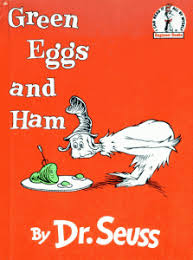


At the age of 20, I became a mom. By the time I was 23, I had 3 children, 3 and under. I completed my education degree a year later. During this time, I read daily to my children. My favorites to read were Dr. Seuss, Where The Wild Things Are, Alexander and the Terrible, No Good, Very Bad Day, Harold and the Purple Crayon and The Velveteen Rabbit. There is a literacy that comes with reading to children. You need to use expression, mimic voices, make sound effects and create a mood. I am grateful to a mom who put me in voice lessons. My legacy of literacy is the love of reading I have passed on to my children and grandchildren.
At the age of 20, I became a mom. By the time I was 23, I had 3 children, 3 and under. I completed my education degree a year later. During this time, I read daily to my children. My favorites to read were Dr. Seuss, Where The Wild Things Are, Alexander and the Terrible, No Good, Very Bad Day, Harold and the Purple Crayon and The Velveteen Rabbit. There is a literacy that comes with reading to children. You need to use expression, mimic voices, make sound effects and create a mood. I am grateful to a mom who put me in voice lessons. My legacy of literacy is the love of reading I have passed on to my children and grandchildren.


Subscribe to:
Comments (Atom)